India AI Impact Summit 2026: The Global South’s Historic Moment in Shaping the Future of AI
How a five-day gathering in New Delhi just rewrote the rules of global AI governance, secured $250B+ in commitments, and put India at the…
How a five-day gathering in New Delhi just rewrote the rules of global AI governance, secured $250B+ in commitments, and put India at the heart of the next tech revolution.
TL;DR
- World’s largest AI summit ever hosted in the Global South (New Delhi, 16–20 Feb 2026).
- Delhi Declaration on AI nearing adoption — 60+ countries already on board.
- India formally joins US-led Pax Silica coalition for secure AI & semiconductor supply chains.
- Over $250 billion in infrastructure investment commitments announced.
- Google CEO Sundar Pichai, Union Minister Ashwini Vaishnaw, and global leaders push “AI of the humans, by the humans, for the humans.”
- Sovereign AI, multilingual models, small-AI solutions, and real-world impact for the Global South take centre stage.
if you are stuck behind a paywall click this friend link to read the article
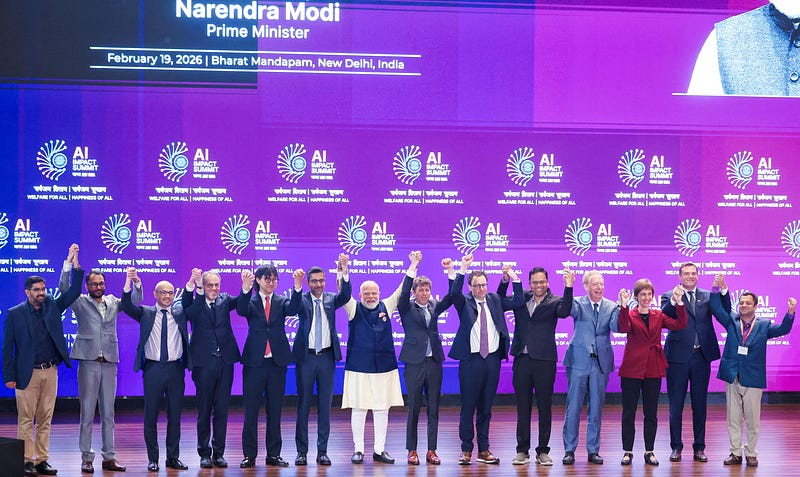
Why This Summit Matters More Than Any Before It
For years, AI summits have been held in Bletchley Park, Seoul, Paris, and San Francisco. On 16 February 2026, the conversation finally moved to Bharat Mandapam, New Delhi — the first time a major global AI summit was hosted by a Global South nation. Organised under the IndiaAI Mission by the Ministry of Electronics and IT (MeitY), the India AI Impact Summit 2026 wasn’t just another talking shop. It was a deliberate shift from “model races” to scaled, inclusive, responsible impact.
Day 5 Highlights (20 February 2026) — The Grand Finale
1. Delhi Declaration on AI — The New Global Consensus
At least 60 countries have already agreed to the text. The final draft and full list of signatories drop tomorrow (21 Feb). The core message?
“AI’s promise is best realised only when its benefits are shared by humanity.”
The declaration emphasises safety, ethics, inclusive deployment, and bridging the digital divide. EU, US, and dozens of Global South nations are on board.
2. India Joins Pax Silica — A Strategic Masterstroke
India officially signed the US-led Pax Silica coalition at the summit — joining Japan, South Korea, Australia, UK, Israel, UAE, Qatar and others. The goal: secure, resilient supply chains for critical minerals, semiconductors, and AI infrastructure — reducing dependence on single geographies. Union Minister Ashwini Vaishnaw called it a “historic step” for India’s semiconductor mission.
3. $250 Billion+ Infrastructure Commitments
From data centres and renewable-powered compute to subsea cables and edge-AI infrastructure — private and public pledges crossed $250 billion. Reliance Jio, Adani, Google, and global players all announced major India-focused investments.
4. Star Keynotes That Defined the Narrative
Sundar Pichai (Google CEO) delivered a powerful keynote stressing US-India partnership on full-stack AI, renewable data centres (50 MW Rajasthan example), and skilling millions. He called the summit “critical for AI’s future.”
Ashwini Vaishnaw laid out India’s five-layer strategy: democratisation, scale, sovereignty, safety, and global interoperability. He unveiled the New Delhi Frontier AI Commitments — a pact with frontier labs to build inclusive, multilingual models in 22+ Indian languages.
India’s Vision: “MANAV” AI — Moral, Accountable, National, Accessible, Valid
The summit showcased 12 indigenous foundation models, the national health AI stack, quantum-AI initiatives (Andhra Pradesh’s “Quantum Valley”), and “small AI” solutions for low-connectivity regions. The message was loud: AI must work for the people, not replace them.
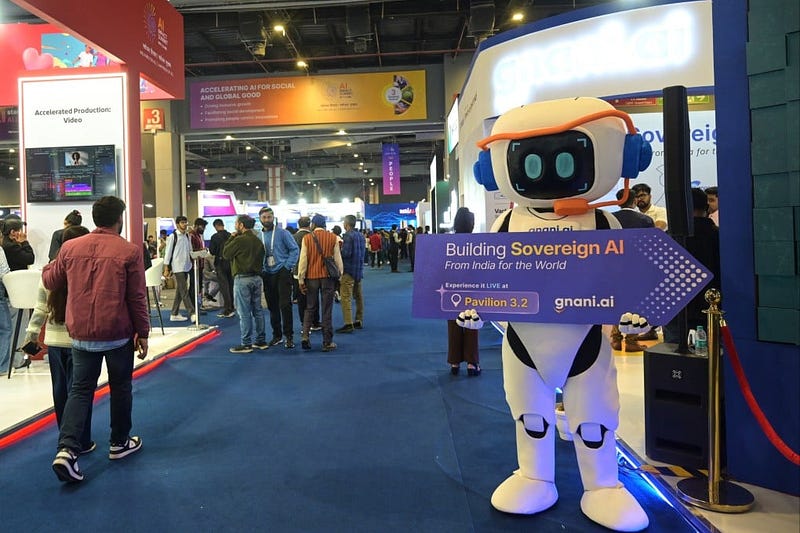
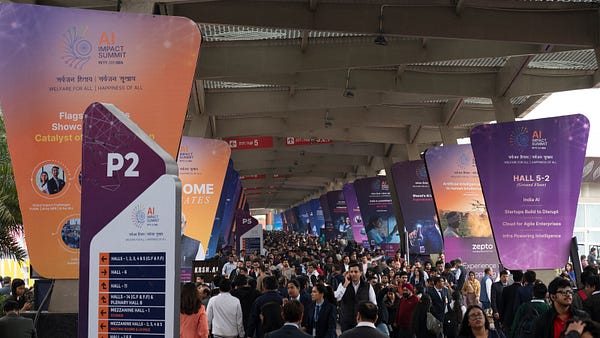
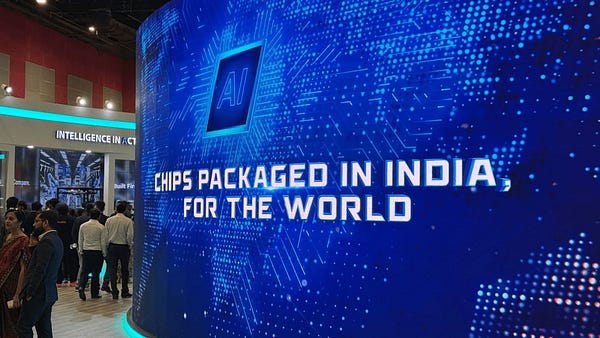

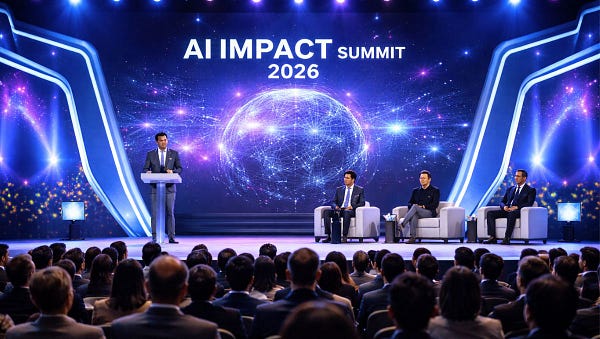
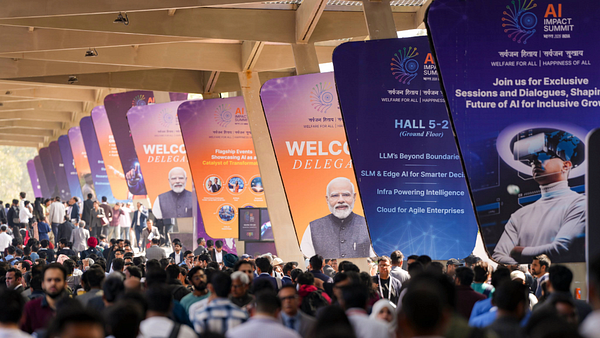
The Expo — Where Ideas Met Reality
300+ exhibitors, 30+ countries, 10+ thematic pavilions. From sovereign AI startups to smart agriculture drones and long-shelf-life food tech powered by AI — the energy was electric (despite the opening-day queues that quickly got fixed).
Challenges & Honest Reflections
Yes, there were protests (Youth Congress, minor disruptions) and initial crowd-management hiccups. Some high-profile cancellations happened. But the scale — 35,000+ registrations, 100+ countries, 500+ startups — overshadowed everything. This was democracy in action at a global tech summit.
What Comes Next?
The Delhi Declaration will be official tomorrow. Implementation roadmaps for Pax Silica and the Frontier AI Commitments begin immediately. India has positioned itself not just as a participant, but as a rule-maker in the age of AI.
What do you think? Will the Delhi Declaration actually move the needle on global AI governance? Drop your take in the comments. If you enjoyed this, clap, share, and follow for more deep dives into India’s tech journey.
Comments ()